What are you looking for?
Search


What Is the Best Age to Start PLLA Filler? Devolux® Guidance
As collagen production gradually declines with age, subtle changes in facial structure and skin quality begin to appear long before deep wrinkles or visible sagging set in. This is why many individuals start exploring biostimulatory treatments earlier than expected—not to dramatically change their appearance, but to preserve skin strength, elasticity, and natural volume over time.
So, what is the best age to start PLLA filler? Keep reading to find out!
Key Takeaway: What Is the Best Age to Start PLLA Filler?
For most patients, PLLA dermal filler treatments are commonly initiated between the late 30s and early 50s, when collagen loss becomes more noticeable but before significant structural collapse occurs. That said, some individuals may benefit earlier for preventive support, while others may start later as part of a broader facial rejuvenation plan.
Rather than focusing strictly on chronological age, qualified practitioners evaluate skin quality, volume loss patterns, lifestyle factors, and treatment expectations to determine optimal timing.
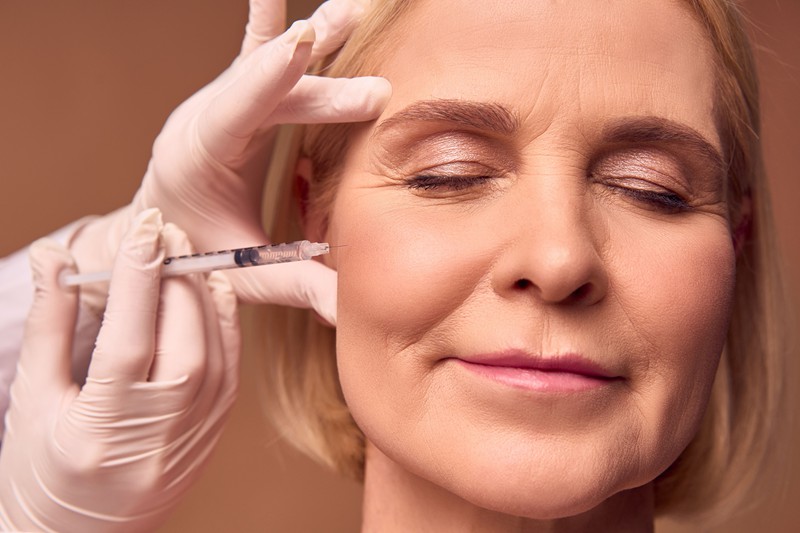
PLLA Filler: A Strategic Option for Long-Term Wrinkle Reduction Without Surgery
Poly-L-lactic acid (PLLA) fillers offer a distinct approach to facial rejuvenation for individuals seeking long-term wrinkle reduction without relying on botulinum toxin injections or surgical procedures. Rather than temporarily relaxing muscles or mechanically filling lines, PLLA works at a deeper biological level by stimulating the skin’s own collagen production.
Once injected, PLLA microparticles initiate a controlled regenerative response that activates fibroblasts and promotes gradual collagen synthesis. Over time, this process helps improve skin firmness, soften wrinkles, and enhance structural support in a way that evolves naturally with the face. As the PLLA particles are gradually metabolized, newly formed collagen remains, allowing results to develop progressively over several months and persist far longer than many short-acting aesthetic treatments when protocols are properly followed.
Factors That Determine the Ideal Age to Start PLLA Filler
The decision to begin PLLA filler treatment is influenced by several interrelated factors:
· Early signs of collagen loss, such as hollowing, skin laxity, or reduced firmness
· Genetic aging patterns and facial structure
· Lifestyle influences, including sun exposure, smoking, and stress
· Skin thickness and elasticity
· Aesthetic goals, particularly preference for gradual and natural-looking outcomes
These considerations often matter more than age alone when determining candidacy.
PLLA Filler by Age Group: What to Expect
Late 20s to Early 30s: Preventive Considerations
At this stage, most individuals still maintain strong collagen reserves. PLLA fillers are not routinely required, but may be considered in select cases where early volume loss, genetic hollowing, or accelerated aging is present. Treatment in this age group focuses on prevention rather than correction and is typically conservative.
Mid-30s to 40s: Early Structural Support
This is often the period when collagen decline becomes clinically noticeable. Subtle volume loss in the temples, midface, or jawline may begin to affect facial balance. PLLA fillers can help reinforce underlying structure, improve skin quality, and slow the progression of visible aging when used as part of a long-term plan.
50s: Collagen Restoration and Skin Rejuvenation
For many patients, the 50s represent an optimal window to start or continue PLLA treatments. Collagen depletion is more pronounced, and skin laxity may be evident. PLLA fillers can support global facial rejuvenation, enhance firmness, and improve contour over time when administered in staged sessions.
60s and Beyond: Individualized Treatment Planning
PLLA fillers may still be appropriate for older patients, provided expectations are realistic and overall health is carefully assessed. In this age group, PLLA is often used in combination with other modalities to address more advanced volume loss and skin laxity.
Who May Not Be a Suitable Candidate for PLLA Filler
PLLA fillers are not appropriate for everyone. Treatment may be deferred or avoided in patients with:
1. Active skin infections or inflammation at the injection site
2. Certain autoimmune or connective tissue disorders
3. Pregnancy or breastfeeding
4. Unrealistic expectations regarding immediate results
A thorough medical evaluation by a qualified professional is essential before treatment.
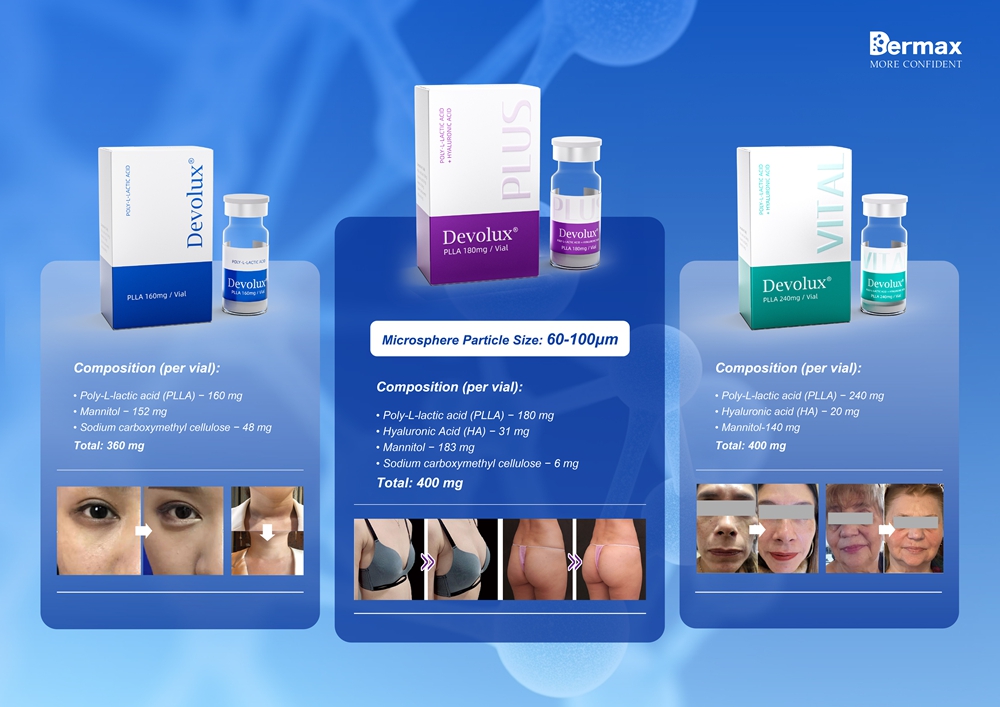
Product Recommendation: Devolux® PLLA Filler
For clinics seeking a reliable poly-L-lactic acid option, Devolux® PLLA Filler is designed to support collagen stimulation with a formulation intended for efficient preparation and consistent clinical handling. It is commonly used in facial and selected body indications where gradual, natural-looking volume restoration is desired.
To accommodate different treatment goals and anatomical needs, the Devolux® PLLA series offers several tailored options:
Devolux®: a versatile poly-L-lactic acid formulation suitable for facial rejuvenation and selected body areas, designed for gradual, natural-looking collagen stimulation.
Devolux® Vital: a PLLA-based filler combined with hyaluronic acid, intended for patients seeking collagen stimulation with added hydration and skin quality improvement.
Devolux® Plus: formulated with larger PLLA particles, commonly selected for body contouring applications such as buttock or breast enhancement where greater volumization is required.
As with all PLLA treatments, appropriate product selection, preparation, and injection technique are critical to achieving predictable and satisfactory outcomes.

Frequently Asked Questions
Is there a minimum age for PLLA filler?
There is no strict minimum age. Treatment decisions are based on clinical need rather than age alone, though most patients begin in their 30s or later.
How long do PLLA results last?
Results can persist for an extended period due to collagen regeneration, particularly when maintenance protocols are followed.
Can PLLA be combined with other aesthetic treatments?
Yes. PLLA is often incorporated into comprehensive treatment plans alongside other modalities, depending on patient goals.
Does PLLA provide immediate results?
PLLA works gradually. Visible improvements typically develop over several months as new collagen forms.
Final Thoughts
The best age to start PLLA filler is best defined by skin condition and long-term goals, not by a specific birthday. With proper planning and professional guidance, PLLA fillers can play a meaningful role in maintaining facial structure, skin quality, and natural-looking rejuvenation across different stages of aging.